Industry · Design studios
Keep proposals, feedback rounds, and case studies moving while you design
Design studios can use AI agents to turn client briefs into draft proposals, write up feedback after calls, chase overdue approvals, and draft case studies from finished projects. In Brainwrite, a Chief of Staff bot hands each task to a specialist bot working in your email, calendar, and project tools. Designers keep the creative decisions and approve every client message.
Design studios · example team
 NovaChief of Staff
- NovaChief of Staff
 PennyInbox and CRM specialist
 AtlasResearch bot
 DashKeeper, Sales Operations Analyst
Brief your Chief of Staff. It picks the specialists and runs the team.
Where the week goes
The work that eats your time.
Briefs into proposals
Every enquiry needs a scope, a timeline, and a deliverables list written up before anyone can price it.
Feedback rounds
Comments arrive by email, on calls, and as notes on files. Someone has to collect them into one list of changes.
Waiting on sign-off
Projects stall because a client has not approved a round, and nobody has time to chase politely.
Case studies never written
Finished projects deserve a write-up for the portfolio. The next project starts first.
Start here
The first job to hand off.
A recap after every client call
Give a bot the Fireflies transcript or your notes. It drafts a recap with the decisions, the requested changes as a checklist, and open questions, ready for you to edit and send.


Every weekday at 7:30, look at my Google Calendar for meetings with people outside the company. For each, summarise our last email threads, the HubSpot deal stage, and anything I promised, and post the briefs to a thread called Meeting prep.
Your Chief of Staff put a team on it
 Nova· Chief of Staff
 Penny· Inbox and CRM specialist
 Atlas· Research bot
- 3 external meetings today; briefs below
- 11:00 Northwind (Alex Rivera, Ops Lead): deal in Proposal stage; you promised a security questionnaire by Friday
- 14:00 Lumen Dental: first call; their site lists 4 clinics and a new booking page launched this month
- 16:30 Harbor & Pine: last thread ended with their question on onboarding time, still unanswered
DoneWhat to raise in the meeting waits for you. Nothing was sent.
What the team takes on
Jobs your AI team does every week.

Proposal drafts
Turn an enquiry email and your past proposals into a draft scope, timeline, and deliverables list for you to price and adjust.

Feedback to task lists
Collect comments from email and call notes into cards on your Asana or Trello board, for you to confirm.

Sign-off chasers
Find projects waiting on client approval and draft a short, specific reminder for each. Nothing sends automatically.

Case study drafts
Draft a case study from the brief, your notes, and the final deliverables, for you to edit before it goes on your site.
Studio newsletter and posts
Repurpose an approved case study into a newsletter section and posts in your studio's voice, for review.
Why a team
Why this works better than a chatbot.
Several client workspaces
Connect up to five labelled accounts per app, such as a client's Slack workspace beside your own. Grants control tools, not accounts, so use a separate installation where strict separation is required.
Approval before clients hear from you
In Ask mode, sending an email becomes an approval card in the conversation. Nothing reaches a client unseen.
Bots that work together
Put a writer and an editor in one group conversation, or let the Chief of Staff delegate bounded tasks and summarise the results.
Files stay on your Mac
Briefs, drafts, and bot memory stay on your machine. Text goes only to the AI provider and apps you choose.
In detail
See the jobs step by step.





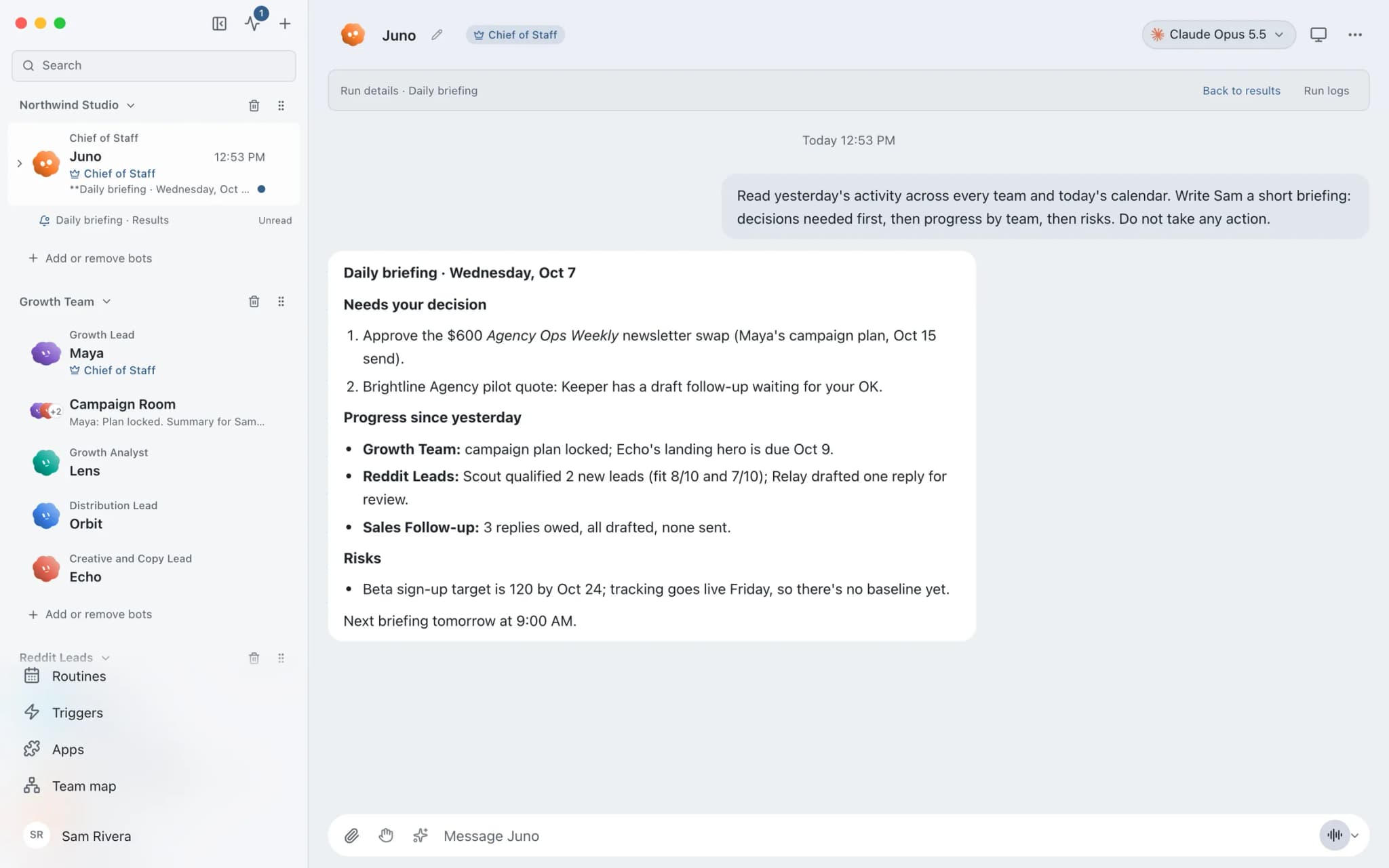
See it in the app
What it looks like in Brainwrite.
A real screenshot from a demo workspace.
Start faster
Ready-made teams to start from.
Your tools
Apps your team works in.
Gmail
Bots search, label, and read Gmail threads and draft replies in place. Sending waits for your approval.

Asana
Turn meeting notes into Asana tasks, chase overdue work, and draft project status updates from the real task list.

Trello
Add Trello cards with checklists, move them between lists, set due dates, and spot cards stuck on a board.

Dropbox
Bots search, read, upload, and move Dropbox files, and create shared links once you approve.

Fireflies
Bots read Fireflies transcripts, ask AskFred about calls, and turn what was said into follow-ups and CRM notes.
FAQ
Questions about Brainwrite for design studios
How can a design studio use AI agents?
Hand them the writing and admin around the design work: proposal drafts from briefs, recaps after client calls, feedback lists, sign-off reminders, and case studies. Brainwrite runs a team of bots on your Mac that draft from your email, project board, and notes. Designers make the creative decisions and approve every client message.
Does Brainwrite create the designs?
No. Brainwrite runs AI agents that read, write, and organise in the apps you connect; it is not a design tool. Bots can work with Canva through its connector, for example to resize a design or fill a brand template, but the creative direction and the design work stay with your studio.
Can bots read client files?
Only files you put in a bot's working folder or grant through a connected app such as Dropbox or Google Drive. Each bot's grant is all tools, an exact list, or none. File contents a bot reads are sent to the AI provider you chose, so check client agreements before sharing unreleased work.
What does it cost?
Brainwrite Cloud is $99 a month and includes the desktop app and an always-on cloud computer. AI usage is not included: you bring your own Claude, Codex, or other AI account, and your provider bills you. There is no free plan. Each thread shows its token use and cost.
Related
Related industries.

Marketing agencies
Client reports, campaign drafts, and competitor briefs prepared by a team of bots and reviewed by you before they go out.
Architects
Meeting minutes, fee proposal drafts, consultant chasers, and client updates, while architects keep the design decisions.
Photographers
Enquiry replies, shoot prep notes, quote follow-ups, and session blog posts, drafted by bots and approved by you.

Give your first job to Brainwrite.
Download the app, connect the AI you already pay for, and tell your Chief of Staff what needs doing.
macOS today. Windows and Linux are coming soon.