Use case · SEO
Turn search data into a 30-day plan with owners
To build an SEO growth plan with AI agents, install the Find SEO Growth Opportunities team in Brainwrite and share your search data. Nova ranks opportunities by impact, confidence, and effort. Scout maps keyword demand, Atlas checks technical constraints, and Quill writes the briefs. Every recommendation ends with an owner, an expected outcome, and a way to verify it.


Here is our Search Console export for the last three months. Find our three strongest growth opportunities and build a 30-day plan with owners and success measures.
Your Chief of Staff put a team on it
 Atlas· Nova, SEO Strategist
 Sage· Scout, Keyword Researcher
 Dash· Atlas, Technical SEO Auditor
 Penny· Quill, SEO Content Editor
- Opportunity 1: improve the existing pricing guide; it ranks on page 2 for 14 related queries (observed, from your export)
- Opportunity 2: two pages compete for the same setup query; merge and redirect
- Technical: 23 blog URLs blocked by robots.txt that should be indexable
- Brief drafted for the pricing guide, owner Sam, verify with Search Console clicks after 30 days
DoneSaved as a routine: Mondays and Wednesdays at 9:00. It starts paused until you turn it on.


SEO growth plan: done. Nothing sent.
- 1Opportunity 1: improve the existing pricing guide; it ranks on page 2 for 14 related queries (observed, from your export)
- 2Opportunity 2: two pages compete for the same setup query; merge and redirect
- 3Technical: 23 blog URLs blocked by robots.txt that should be indexable
4 bots on this jobThe job
Doing it yourself, and handing it off.
Doing it yourself
You export Search Console queries, sort by impressions, and stare at a long list. Which ones deserve a new page, and which need an existing page improved? Are two pages competing for the same query? Is a technical issue holding a page back? Answering takes keyword research, a crawl, and content planning, often by different people, and the plan that comes out usually lacks owners or any way to check whether it worked.
What the team does
- Cluster queries by intent, funnel stage, and current coverage
- Flag cannibalisation and choose between a new page and an existing-page improvement
- Report technical findings with affected URLs, severity, and a proposed fix
- Write content briefs that keep observed data separate from estimates
What waits for you
- Which opportunities to work on this month
- Who owns each action
- What gets published
See it in the app
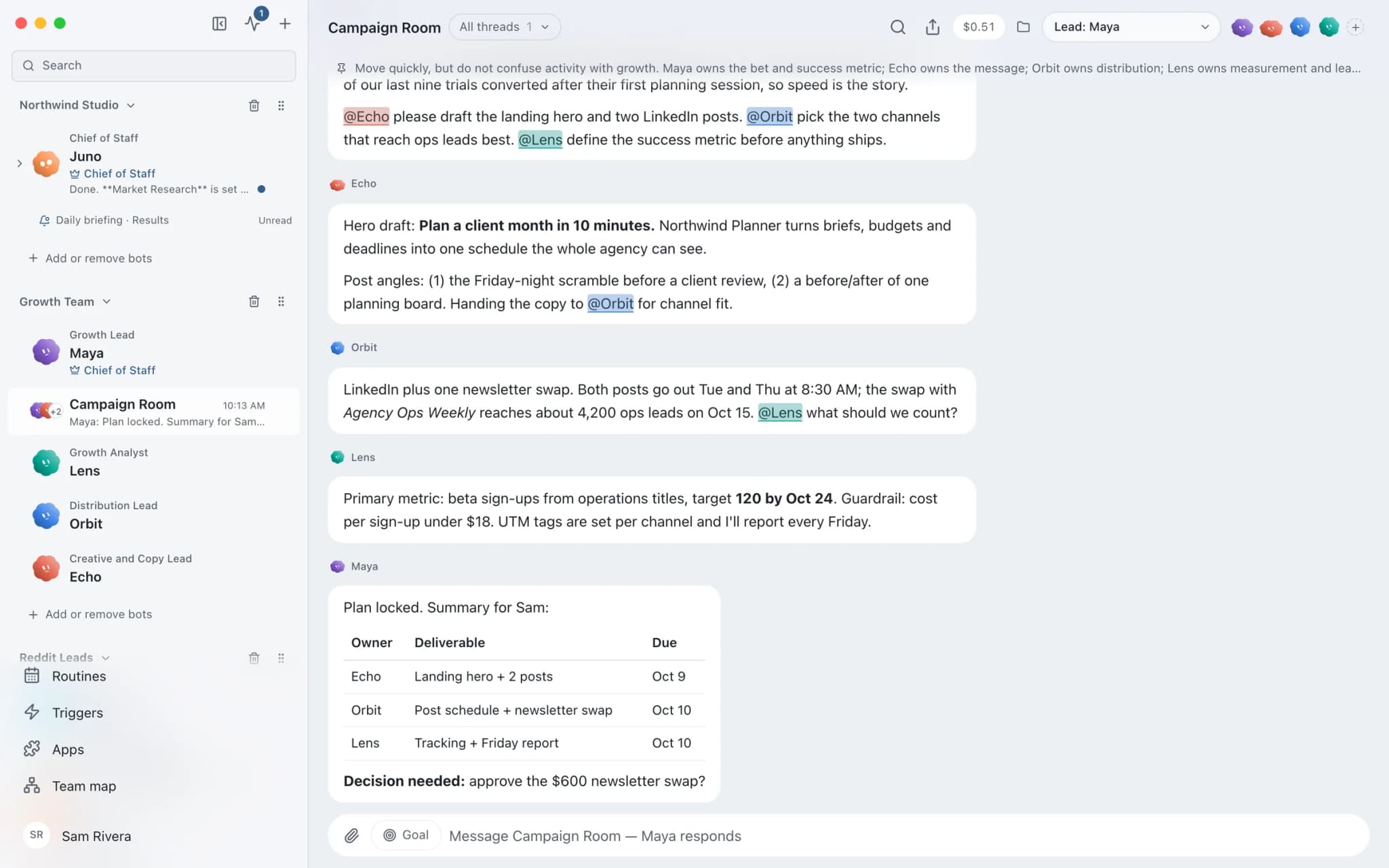
What it looks like in Brainwrite.
A real screenshot from a demo workspace.
The team
Who's on it.
Your Chief of Staff picks the specialists the job needs. Each has its own role, instructions, model, and app access.
 AtlasIllustrated example
Nova, SEO Strategist
Turns business goals into a prioritised roadmap and ranks every recommendation by expected impact, confidence, and effort.
 SageIllustrated example
Scout, Keyword Researcher
Groups queries by intent and funnel stage, flags cannibalisation and content gaps, and never invents volumes or rankings.
 DashIllustrated example
Atlas, Technical SEO Auditor
Diagnoses crawl, indexing, canonical, and structured-data issues from the evidence you provide, with affected URLs and a verification step.
 PennyIllustrated example
Quill, SEO Content Editor
Turns validated opportunities into briefs with audience, angle, outline, evidence needs, and internal links.
How it runs
A run, step by step.
- 01
Install and share data
Add the team from the team library. Share Search Console exports or a connected source, plus your audience, offer, and market.
- 02
Map the opportunities
Scout clusters queries by intent and current coverage, and Atlas checks whether technical issues block any of them.
- 03
Rank and brief
Nova ranks the opportunities, and Quill writes briefs for the top ones, each with an owner and a success measure.
- 04
Review every week
Two paused routines are included: Nova's search review on Mondays at 9:00 and Atlas's crawl check on Wednesdays at 9:00.
Start faster
Ready-made teams for this job.
Add a team from the library in one click. You see a preview first; routines arrive paused and connected apps stay off until you approve them.
What you'll connect
Apps this job uses.

Google Search Console
Pull Search Console queries and pages, inspect URL indexing, check sitemaps, and find pages losing clicks.

Google Sheets
Bots read and write Google Sheets, append and upsert rows, and add charts to trackers and reports.

Google Analytics
Run GA4 reports, compare periods, check funnels and realtime traffic, and get changes explained in plain English.
FAQ
Questions about SEO growth plan
Will the AI make up keyword volumes?
No. Scout's instructions are to separate observed data from estimates, never invent volume, rankings, traffic, or difficulty, and say what evidence is missing. The whole team labels estimates and cites the source and date of any metric. If no current data is available, the weekly review asks for it.
What data do I need to give it?
Search Console query and page data is the most useful start, plus a crawl export if you have one. Tell Nova your audience, offer, market, and conversion goal. Google Sheets is an optional connected app for keeping the roadmap and results in one place.
What do the weekly routines do?
Mondays at 9:00, Nova reviews the newest search evidence and picks the three highest-value actions for the week, each with an owner. Wednesdays at 9:00, Atlas checks crawl and indexing evidence for regressions such as new errors or broken canonicals. Both install paused until you turn them on.
Built on
Features this job relies on.
Team library
Add a ready-made team of bots in one click. Preview first; routines arrive paused and apps stay off.
Routines
Run a bot's task once, on an interval, or on chosen weekdays, with a receipt for every run.
Threads and groups
Up to three independent threads per bot, plus group chats where several bots share one brief.
Memory
Plain-text memory per bot that you can read, fix and delete. No hidden profile.








Give your first job to Brainwrite.
Download the app, connect the AI you already pay for, and tell your Chief of Staff what needs doing.
macOS today. Windows and Linux are coming soon.